
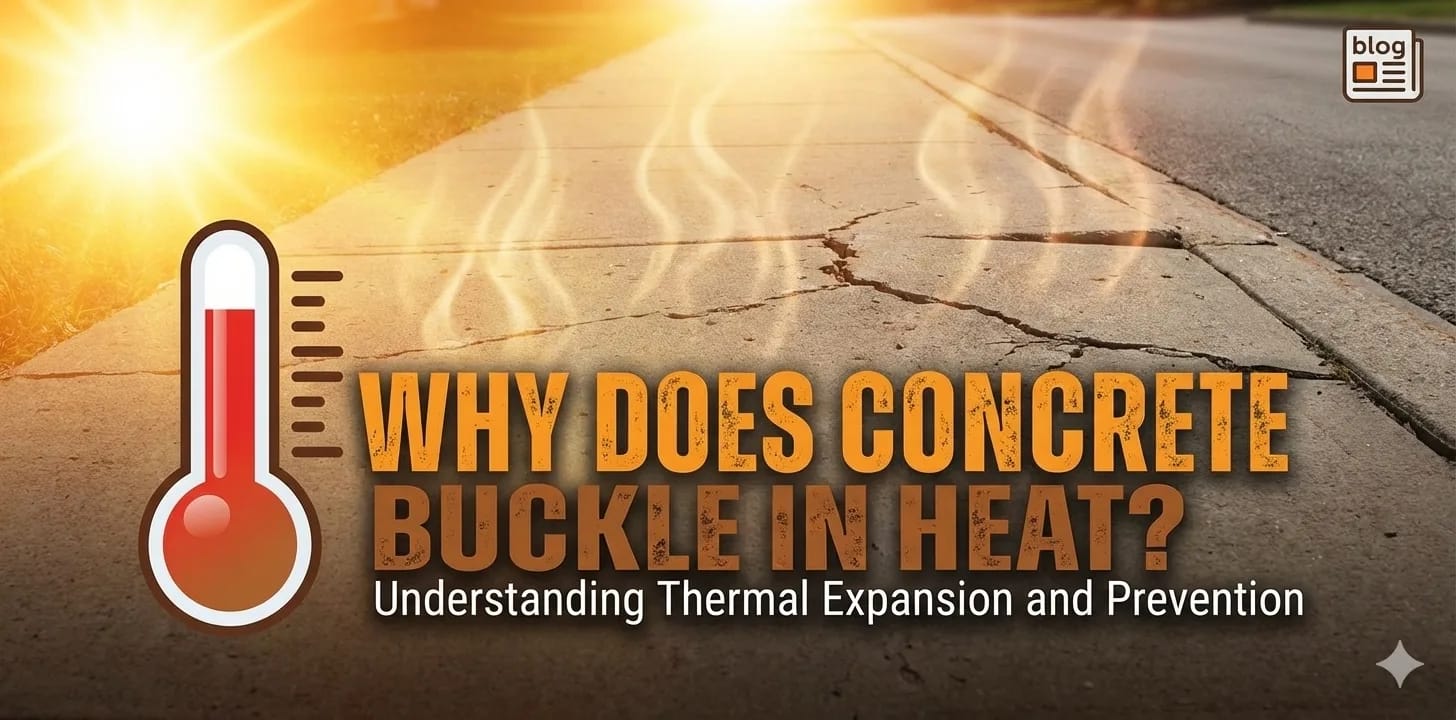
Concrete is known for its strength and durability, but many homeowners are surprised to see it crack, lift, or even buckle during hot weather. If you’ve noticed uneven concrete surfaces or raised slabs in summer, you’re not alone. Heat-related concrete damage is more common than people realize—especially in areas with extreme temperature changes.
Understanding why concrete buckles in heat can help you prevent costly repairs and extend the life of your driveway, patio, or sidewalk. In this blog, we’ll explore how heat affects concrete, what causes buckling, warning signs to watch for, and how professionals prevent and repair heat-related concrete damage.
How Heat Affects Concrete
Concrete naturally expands when temperatures rise and contracts when they fall. This expansion and contraction is normal—but problems occur when concrete doesn’t have enough room to move.
During hot weather:
- Concrete absorbs heat and expands
- Moisture within the slab evaporates
- Internal pressure builds up
If the slab is restrained by surrounding structures or installed without proper expansion space, the pressure has nowhere to go. This stress causes the concrete to lift, crack, or buckle.
What Is Concrete Buckling?
Concrete buckling occurs when a slab expands upward or sideways instead of spreading evenly. This results in raised edges, uneven surfaces, or broken sections. Buckling can happen suddenly and dramatically, especially during heat waves.
Common areas affected by buckling include:
- Driveways
- Sidewalks
- Patios
- Garage floors
- Concrete roads
Buckled concrete isn’t just unsightly—it can create serious safety hazards and structural problems.
Main Causes of Concrete Buckling in Heat
1. Lack of Expansion Joints
Expansion joints are gaps placed between concrete slabs that allow movement during temperature changes. Without them, concrete slabs push against each other as they expand, leading to buckling.
This is one of the most common reasons concrete fails in hot weather.
2. Poor Installation Practices
Concrete installed without proper planning is far more likely to buckle. Issues include:
- Incorrect spacing of joints
- Improper slab thickness
- Poor base preparation
- Overly rigid connections to structures
Professional installation is critical for preventing heat-related damage.
3. Excess Moisture and Poor Drainage
Water trapped beneath or within the slab increases internal pressure when temperatures rise. As moisture heats and expands, it weakens the concrete’s ability to handle stress.
Improper drainage often worsens buckling problems
4. Soil Expansion Under the Slab
Some soils expand when heated or exposed to moisture. This upward pressure combined with concrete expansion can cause slabs to lift or crack.
This is especially common in areas with clay-heavy soils.
5. Restrained Concrete Slabs
Concrete that is tightly connected to walls, curbs, or other structures cannot move freely. When expansion occurs, the slab pushes upward instead of outward.
Signs Your Concrete Is Buckling
Early detection can save you from major repairs. Watch for these warning signs during hot weather:
- Raised or uneven sections
- Cracks that widen in summer
- Sudden popping or snapping sounds
- Trip hazards along joints
- Separation between slabs
If any of these appear, professional inspection is recommended.
Is Buckled Concrete Dangerous?
Yes. Buckled concrete can:
- Create tripping hazards
- Damage vehicles
- Allow water infiltration
- Lead to further cracking and deterioration
- Reduce property value
Ignoring the problem often leads to more extensive and expensive repairs later.
How Professionals Prevent Concrete Buckling
Experienced concrete contractors use several techniques to prevent heat-related buckling:
- Proper Expansion Joints: Correct placement and spacing of joints allow safe movement during temperature changes.
- Quality Base Preparation: A compacted, well-drained base reduces pressure from below the slab.
- Correct Concrete Mix: Using the right mix design improves flexibility and heat resistance.
- Adequate Curing Time: Proper curing prevents internal stress that can weaken concrete over time.
- Controlled Slab Thickness: Slabs designed for their intended load and environment perform better long-term.
How Buckled Concrete Is Repaired
Repair options depend on severity:
- Minor buckling: Grinding or joint repairs
- Moderate damage: Partial slab replacement
- Severe buckling: Full removal and reinstallation
In many cases, fixing the underlying cause is just as important as repairing the surface.
How Homeowners Can Reduce Heat Damage
You can help protect your concrete by:
- Keeping joints clean and sealed
- Ensuring proper drainage around slabs
- Avoiding heavy loads during extreme heat
- Scheduling routine inspections
Preventative maintenance goes a long way in extending concrete lifespan.
Final Thoughts
Concrete buckling in heat isn’t a defect—it’s usually the result of poor planning, improper installation, or restricted movement. As temperatures rise, concrete needs room to expand. Without it, pressure builds and failure occurs.
By understanding the causes and signs of buckling, homeowners can take proactive steps to protect their investment. Whether installing new concrete or addressing existing issues, professional design and installation are the best defenses against heat-related concrete damage.